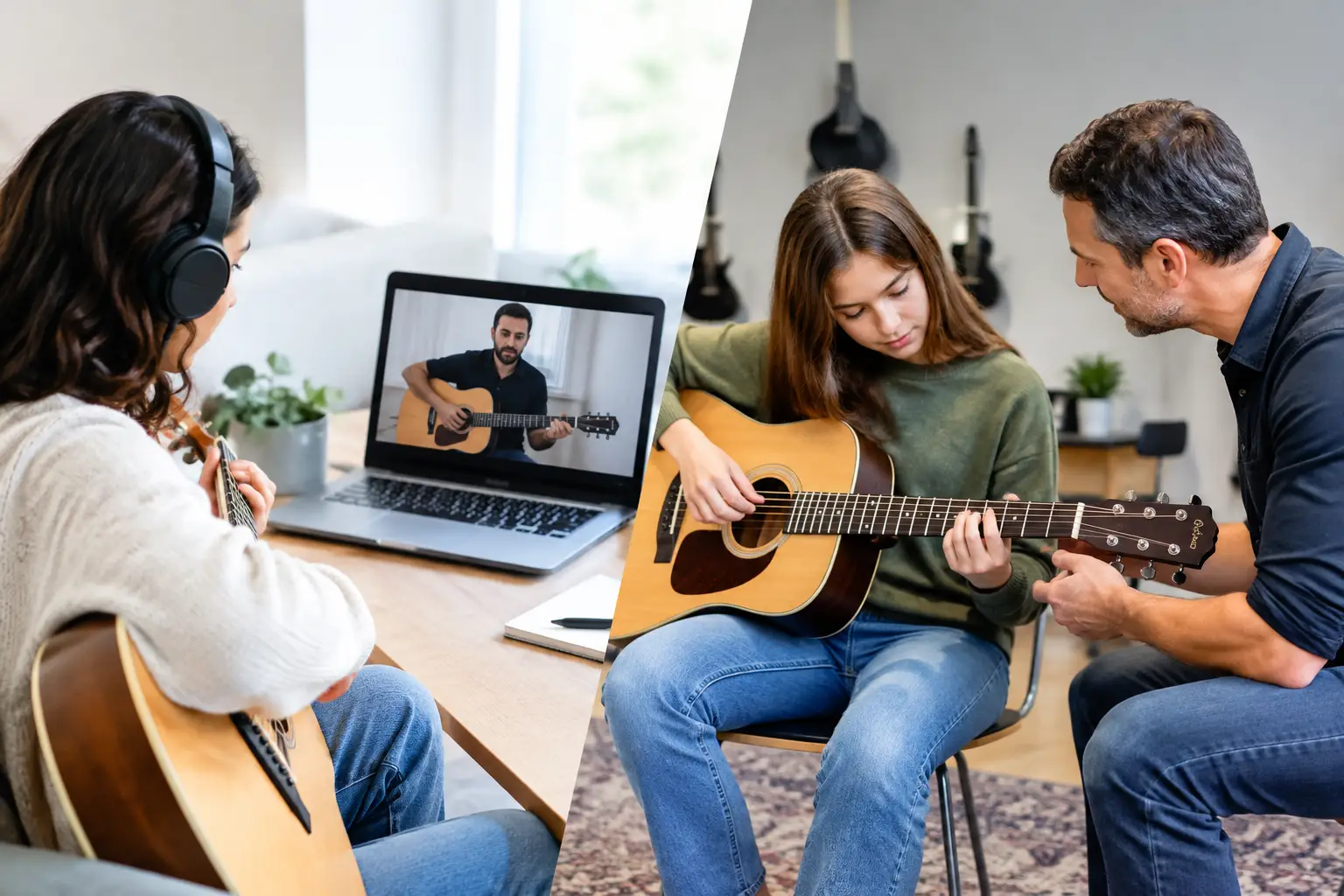
Online Versus Studio Lessons: Which Is Right?
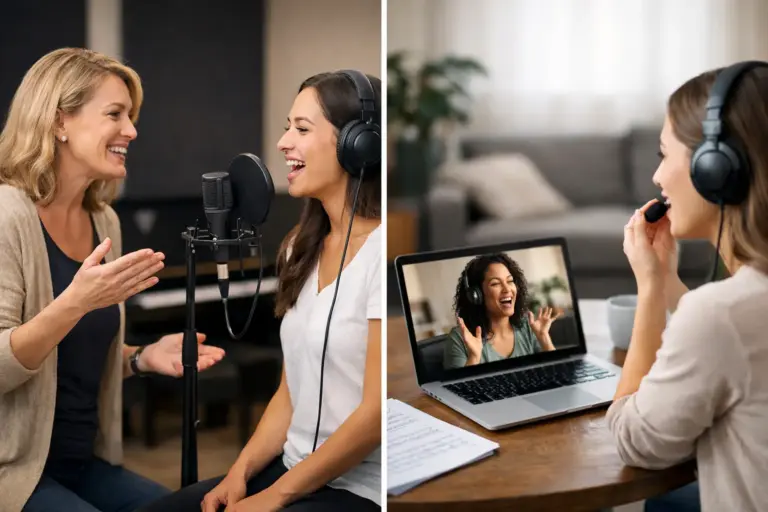
A singer can make a real breakthrough in a spare room with headphones on, or in a teaching studio with a coach at the piano. The question of online versus studio lessons is not about which format is more legitimate. Both can develop a healthy, confident, expressive voice. The better question is: which setting helps you show up consistently, hear feedback clearly, and apply it in your own singing?
For adult beginners, choir members, returning singers, and developing performers, the answer is often more personal than expected. Your schedule, confidence level, technical needs, and practice habits all matter. A good lesson is not defined by the room. It is defined by attentive listening, clear guidance, and work that carries into the next week of singing.
I'm John J Norton, a professional singer and vocal coach. I teach one-to-one online, wherever you are in the world. Book a free 15-minute call.
Online Versus Studio Lessons: What Actually Changes?
The essentials of voice training remain the same in either format. You still need to learn how your breath supports the phrase, where unnecessary tension is getting in the way, how vowels affect tone, and how to coordinate registers without forcing. You still need a coach who listens carefully and gives you one manageable priority at a time.
What changes is the experience around that work. Online lessons bring coaching into the space where many people actually practice. Studio lessons provide a shared acoustic environment and direct in-person observation. Neither automatically produces better results. Each gives a skilled teacher different information, and each asks something slightly different of the student.
A singer who is disciplined but short on time may progress quickly online because lessons fit naturally into a busy week. Another singer may need the focus of leaving home, entering a dedicated room, and being fully present with their voice. It depends less on whether you are a "serious" singer and more on what helps you work regularly and openly.
The Strengths of Online Voice Lessons
The most obvious benefit of online coaching is access. You can work one-to-one with an experienced teacher from almost anywhere, without turning a lesson into an evening of travel. That matters for professionals with demanding schedules, students, parents, people living far from a specialist teacher, and singers who simply find it easier to protect an hour at home.
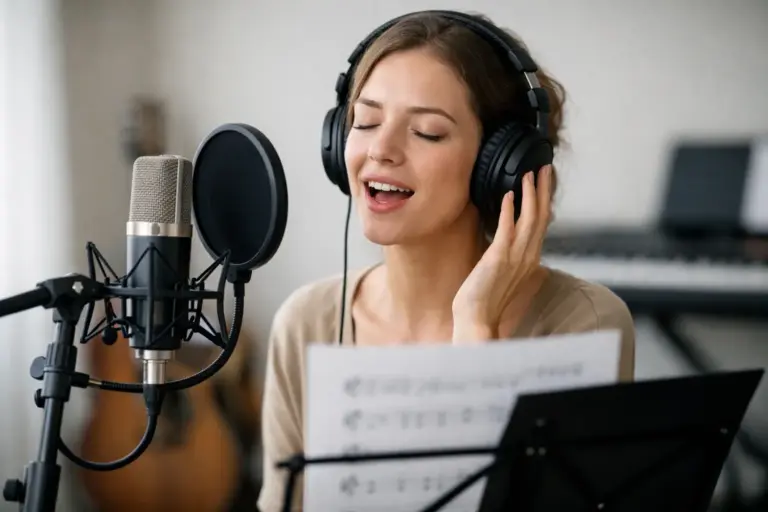
There is another advantage that is easy to overlook: you learn in your real practice environment. If your keyboard, backing tracks, music stand, and usual warm-up spot are already there, your coach can help you make that setup work better. The exercises you learn are immediately connected to the place where you will repeat them during the week.
Online lessons can be remarkably focused. A close camera view may reveal a raised chin, a tightening jaw, or a breath pattern that needs attention. Screen sharing can make it easy to examine lyrics, mark breathing points, or look at a score together. Recordings, when used thoughtfully and with permission, can also help you hear the difference between what singing felt like and what it sounded like.
For singers who feel self-conscious, home can be a gentler starting point. You are in familiar surroundings, and it may be easier to take vocal risks without worrying about who is in the next room. That comfort can be especially valuable when rebuilding confidence after years away from singing.
Online work does have practical limits. Sound is compressed by video platforms, so a teacher does not hear every overtone, dynamic shade, or detail of resonance exactly as they would in person. You cannot sing in perfect time with a coach playing live because of internet delay. A strong online teacher accounts for this by asking precise questions, requesting short unaccompanied phrases when useful, and giving you clear recordings or practice tracks to use between sessions.
Your equipment does not need to be elaborate, but it should be dependable. A stable internet connection, headphones, a device positioned at eye level, and a space where you can stand and move comfortably will make a noticeable difference. Most importantly, choose a time when you can sing freely rather than holding back because you are concerned about being heard.
What Studio Lessons Offer
In-person lessons offer the immediacy of sharing the same room. Your teacher hears the natural sound of your voice without digital processing and can respond to it in the moment. For some singers, that acoustic clarity is particularly helpful when working on subtle changes in resonance, volume, or tonal balance.
A studio also creates a useful boundary around the lesson. You arrive, put the rest of the day aside, and devote your attention to the work. If practice at home is interrupted by emails, household demands, or the temptation to rush through exercises, that protected space can make a difference.
There is a physical dimension to singing that can be easier to address face-to-face. A coach can observe your whole posture as you breathe, release tension, move through a phrase, or prepare to perform. Sometimes a small adjustment to balance, rib movement, or neck freedom becomes clearer when you are standing together rather than framed from the waist up on a screen.
In-person sessions are also well suited to singers who benefit from live musical collaboration. Working with a pianist or hearing an exercise demonstrated directly in the room can be energizing, particularly for classical repertoire, musical theater, and performance preparation. The shared sound can help a singer develop a stronger sense of line, pacing, and communication.
That said, a studio lesson is not automatically more personal or more effective. Travel can make regular attendance difficult, especially when work, weather, or distance intervene. Some singers also become overly reliant on the energy of the room and struggle to recreate the same freedom at home. The best studio teaching makes sure you leave with practical tools you can use independently.
For singers in Luxembourg, face-to-face coaching can offer that focused, shared-room experience while still keeping the work practical and individual. But location should support your progress, not become an obstacle to it.
How to Decide Which Format Fits You
Start with consistency. The most effective lesson format is usually the one you can maintain without exhausting your schedule. A weekly online lesson may serve you far better than an in-person option that you can only manage occasionally. Vocal development comes from repeated, intelligent practice, not from the prestige of a particular setting.
Next, consider how you learn. If you process feedback well through explanation, demonstration, and recordings, online lessons may feel natural. If you need the energy of a shared room, want detailed observation of your physical setup, or find it difficult to concentrate at home, studio lessons may give you a stronger foundation.
Your current goals matter too. Someone preparing for an audition, recital, or demanding performance may appreciate occasional in-person sessions for detailed acoustic and performance feedback. A choir singer wanting more reliable breath management, easier high notes, and less throat tension may make excellent progress online. A business professional working on vocal clarity, pace, and authority can often benefit very effectively through video coaching, because the format closely resembles many modern meetings and presentations.
Do not make the choice based on fear. Some people avoid online lessons because they assume technology will be awkward. Others avoid the studio because they worry they are not good enough to be heard in person. Those concerns are understandable, but neither should decide the matter. Singing lessons are where you learn, experiment, and sometimes sound uncertain. You do not need to arrive polished.
A Hybrid Approach Can Be Useful
For some singers, the choice does not need to be permanent. Online coaching can provide steady support through busy periods, while occasional studio sessions offer a valuable acoustic check-in. This can work especially well for singers who travel, live at a distance, or are preparing for a specific performance.
The important thing is continuity. If the same technical language, warm-ups, and goals carry across both formats, the work remains connected. You are not starting over each time. You are building a reliable relationship with your voice.
Make Either Lesson Format Work Harder
Whichever setting you choose, arrive with a small piece of information: what felt easier this week, what felt difficult, and what you practiced. That gives the lesson a real starting point. If a high note tightened, a phrase ran out of breath, or your speaking voice felt tired after meetings, those are useful clues rather than failures.
Keep your practice simple enough to repeat. Three well-understood exercises done regularly will help more than a long routine you avoid. Notice sensations, but do not chase them blindly. A freer voice is usually built through coordination, patience, and a growing ability to hear what is changing.
Choose the format that lets you be honest, present, and consistent. Your voice does not need the perfect room before it can begin to grow. It needs thoughtful attention, regular use, and the confidence to let yourself be heard.
Want to work on this with me?
I'm John J Norton, a professional singer and vocal coach. I teach one-to-one online, wherever you are in the world.
Want to go beyond reading?
Put this into practice with my step-by-step online course — the first 3 lessons are free to try.
Explore the Online Singing Course