Virtual Versus Studio Vocal Lessons Compared
A lesson can feel transformative when a note that has always tightened suddenly releases, or when a phrase finally carries the intention you meant to communicate. That progress is possible in both virtual versus studio vocal lessons, but the experience of getting there can be quite different. The better choice is not automatically the closest studio or the most convenient video call. It is the format that lets you show up consistently, receive precise feedback, and apply it to the voice you use every day.
For adult singers and performers, the decision often comes down to more than travel time. You may be balancing rehearsals, professional commitments, family life, or a voice that feels unreliable only under pressure. Understanding what each format does well helps you choose coaching with confidence rather than treating online instruction as a compromise or in-person work as the only serious option.
I'm John J Norton, a professional singer and vocal coach. I teach one-to-one online, wherever you are in the world. Book a free 15-minute call.
Virtual Versus Studio Vocal Lessons: What Changes?
The fundamental work of vocal coaching remains the same in either setting. A skilled coach listens for how breath, registration, resonance, articulation, pitch, and muscular effort are interacting. From there, the session is tailored to the singer rather than following a generic exercise routine. You work toward a freer, more responsive instrument and a more convincing performance.
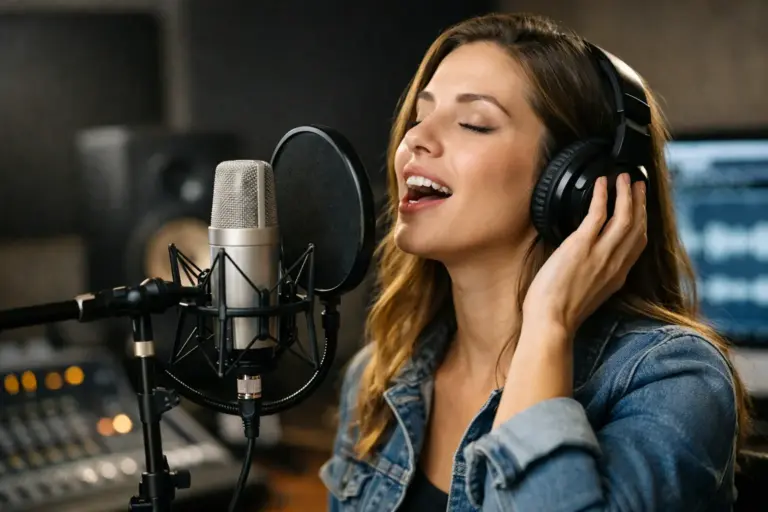
What changes is the information available in the room. In a studio, a coach hears your voice directly in a controlled acoustic space. They can observe posture, jaw tension, rib movement, and the small physical habits that may interfere with efficient vocal production. In a virtual lesson, the coach hears a version of your voice shaped by your microphone, internet connection, room, and device settings. Visual observation is still valuable, but it requires a thoughtful camera angle and good lighting.
That distinction matters, especially when a singer is dealing with persistent tension, inconsistent tone, breath support difficulties, or uncertainty around vocal registration. It does not mean virtual lessons are less effective. It means the coach and client need to be more intentional about setup, listening, and feedback.
When Virtual Coaching Is the Better Choice
Virtual coaching is often an excellent fit for motivated singers who value continuity. If travel, a demanding schedule, or distance would otherwise make regular lessons difficult, online sessions can create the consistency that real vocal development requires. A weekly appointment from your own home may be far more productive than an idealized studio lesson you can only attend occasionally.
It can also be particularly useful for singers who need support around a specific project. Perhaps you are preparing an audition, learning repertoire for a performance, refining a song interpretation, or rebuilding confidence after time away from singing. Because virtual sessions are accessible across locations and time zones, they allow you to work with the right coach without making geography the deciding factor.
There is a practical benefit to working in your usual environment, too. You learn how to warm up, practice, and manage your voice in the same space where much of that independent work actually happens. A coach can help you identify whether your practice room is encouraging you to over-sing, whether accompaniment is too loud, or whether a technical habit appears when you are working alone.
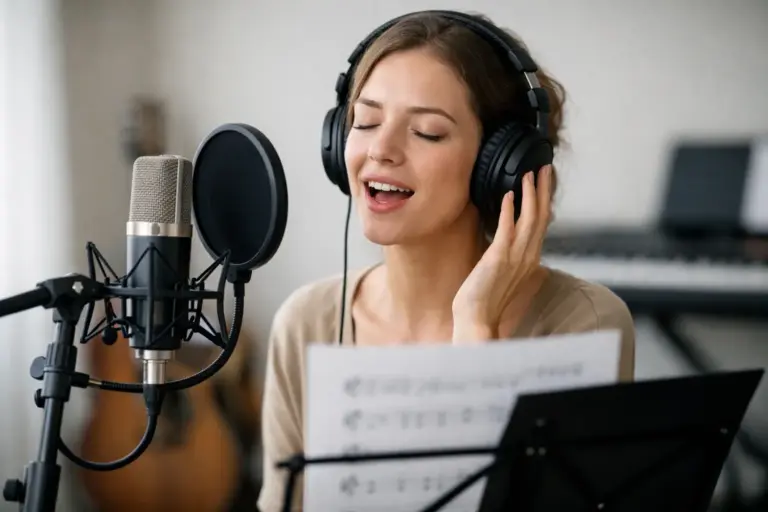
Virtual lessons require a little preparation. Use headphones when appropriate, position the camera so your upper body is visible, and choose the quietest available space. A separate microphone can improve sound quality, but it is not a requirement for meaningful work. The goal is not a polished home recording setup. It is clear enough audio and video for focused, accurate coaching.
One limitation is latency. Singing in perfect real-time unison over a standard video call is not realistic, so exercises and repertoire work are structured differently. A coach may demonstrate, then listen while you sing independently, or work with backing tracks and accompaniment in a way that preserves musical precision. This is a manageable adjustment, not a barrier to serious training.
What Studio Lessons Offer That Screens Cannot
In-person lessons offer the immediacy of shared sound. The coach hears the full range of vocal color, dynamics, and resonance without digital compression. This can be especially useful for advanced singers refining subtle technical choices, performers preparing demanding repertoire, and clients who need close observation of physical coordination.
A studio also creates a dedicated training environment. You arrive, step away from the notifications and responsibilities of the day, and give your voice concentrated attention. For many adults, that boundary is valuable. It can make the lesson feel less like another task squeezed between meetings and more like a disciplined investment in artistic development.
Studio work is often helpful when physical habits are central to the issue. A singer may not realize that the chin lifts on high notes, the shoulders brace before a phrase, or the breath collapses at the end of a line. These patterns can be seen virtually, but in person they are often easier to notice and address in the moment. The same applies to performance presence. How you stand, enter a song, use gesture, and communicate text can be explored with greater spatial freedom.
For some clients, the energy of singing in the same room as a coach also makes a difference. There is accountability in direct collaboration, particularly when confidence has been affected by a disappointing audition, vocal fatigue, or years of self-consciousness. A supportive studio setting can make it easier to take expressive risks and hear your own progress without distraction.
Your Goal Should Lead the Decision
The right format depends less on whether you are a beginner or an experienced singer and more on what you need now. If your main obstacle is inconsistent practice because travel makes lessons hard to sustain, virtual coaching may give you the strongest path forward. If you are preparing for a major live performance and want detailed work on sound, movement, and presence, studio sessions may offer an advantage.
Consider the nature of your concern. Technical questions such as pitch accuracy, breath coordination, range development, interpretation, diction, and practice structure can be addressed effectively online. If you have recurring discomfort, a significant loss of vocal function, or symptoms that suggest a medical issue, coaching should not replace an evaluation by an appropriate medical voice professional. Healthy training begins with respecting that distinction.
Your learning style matters as well. Some people thrive with the independence of virtual work. They listen closely, take notes, practice between sessions, and appreciate the convenience. Others respond best to the focused ritual and direct acoustic feedback of a studio. Neither preference is more serious. The best environment is the one that helps you remain engaged enough to do the work between lessons.
A Hybrid Approach Can Be Highly Effective
This does not have to be a permanent either-or decision. Many singers benefit from combining formats. Regular virtual sessions can maintain technical momentum, while occasional studio appointments provide a deeper check-in on sound, posture, and performance presence. This can be especially practical for clients who travel, live farther away, or have an intense performance period approaching.
A hybrid approach also recognizes that vocal development is not linear. At one stage, you may need frequent help establishing efficient practice habits. Later, you may want in-person refinement before an audition, recording, speech, or concert. The format can serve the work rather than becoming a rule you feel obliged to follow.
For professionals who use their voice in presentations, training, leadership, or public-facing communication, virtual sessions may even reflect the environment in which the skill will be used. Working through camera presence, vocal clarity, pacing, and persuasive delivery on screen can be directly relevant. Studio coaching remains valuable when the goal involves room-filling presence, live speaking confidence, or a fuller assessment of physical delivery.
Make Either Format Work Harder for You
The value of a lesson is shaped by what happens afterward. Record key exercises if permitted, write down the sensations that produced an easier sound, and practice briefly with full attention rather than repeating exercises mechanically. Vocal coordination improves through accurate repetition, not simply effort.
Be candid with your coach about what is happening outside the lesson. If you are tired, preparing a demanding song, speaking heavily at work, or struggling to practice, that information helps shape a realistic plan. Good coaching meets the voice you have that day while keeping sight of the voice you are developing over time.
Choose the setting that makes you more likely to listen carefully, practice intelligently, and return consistently. Whether that is through a screen or in a studio, the most useful lesson is the one that helps your voice feel more reliable, expressive, and genuinely your own.
Want to work on this with me?
I'm John J Norton, a professional singer and vocal coach. I teach one-to-one online, wherever you are in the world.
Want to go beyond reading?
Put this into practice with my step-by-step online course — the first 3 lessons are free to try.
Explore the Online Singing Course