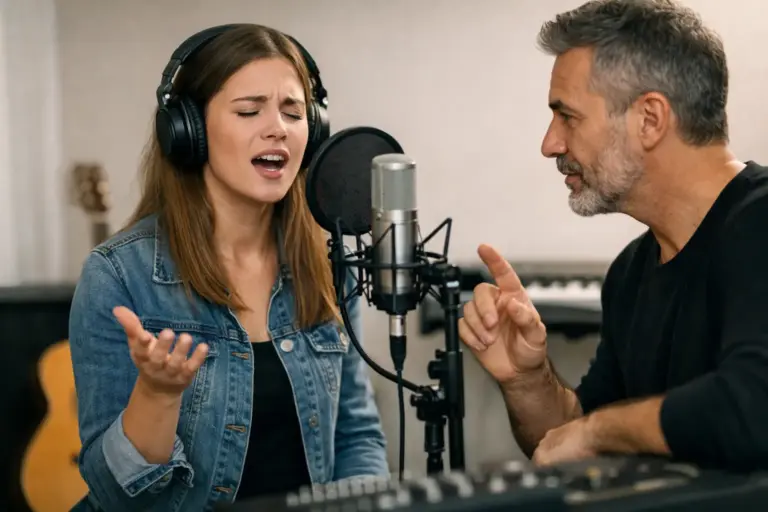
Singing After 60: Keeping Your Range Strong
A high note that once felt easy may now feel just out of reach. Or perhaps the voice still has the note, but getting there requires more effort than it used to. Singing after 60: keeping your range is not about forcing the voice to behave as it did at 25. It is about understanding what has changed, training the voice you have now, and preserving the freedom to sing with confidence.
Many singers assume a smaller range is inevitable and permanent. Some change is natural, but a great deal of perceived vocal decline comes from reduced use, inefficient breath management, tension, or trying to sing repertoire that no longer suits the voice. Those are practical issues, and practical work can make a meaningful difference.
I'm John J Norton, a professional singer and vocal coach. I teach one-to-one online, wherever you are in the world. Book a free 15-minute call.
What Changes in the Voice After 60?
The vocal folds are living tissue, supported by muscles, breath, posture, coordination, and general health. As we age, the vocal folds can lose some bulk and elasticity. The muscles that help manage pitch may also become less responsive if they are not used regularly. This can make the upper range feel thinner, breathier, or less reliable. For some singers, the lower range loses warmth or strength as well.
Hormonal changes, medication, reflux, allergies, dehydration, and reduced lung capacity can all affect singing. So can the habits that develop when a singer begins to distrust the voice. Pushing for high notes, gripping the jaw, lifting the chin, or taking huge breaths often makes range feel smaller, not larger.
This is why it helps to separate aging from vocal habit. Your voice may need a different approach now, but it does not need to become a fragile instrument. A well-trained older voice can have clarity, color, control, and considerable expressive authority.
Singing After 60: Keeping Your Range Without Forcing It
Range is not simply a collection of notes. It is your ability to move through pitches with a workable tone, stable breath, and a sense of ease. A note you can only reach by tightening your neck is not yet a dependable part of your range.
The most productive goal is to strengthen the middle of the voice first. This is where many songs live, and it is the bridge between low and high notes. When the middle register is balanced, the upper range often begins to feel more available. Singers frequently chase the top note when they would benefit more from restoring coordination around the transition area.
Start each practice with gentle, unhurried sound. Lip trills, humming, light sirens, and easy vowels can help the vocal folds come together efficiently without pressure. The purpose is not to make a large sound immediately. It is to let the voice find vibration and connection.
A useful principle is this: do not practice your highest notes at your highest level of effort. Approach them through comfortable patterns, then stop before fatigue appears. A few well-produced repetitions are more valuable than twenty attempts driven by determination alone.
Let the Breath Support the Sound
Breath support is often misunderstood as taking in as much air as possible. In singing, too much air can create just as much difficulty as too little. A large, uncontrolled inhalation can make the shoulders rise, stiffen the upper chest, and flood the voice with pressure.
Instead, aim for a quiet, low, responsive breath. Allow the ribs and abdomen to release outward as you inhale, then keep the torso comfortably active as you sing. The breath should feel managed rather than held. Think of it as a steady stream beneath the sound, not a force pushing the sound upward.
For an older singer, this coordination is particularly valuable because it reduces the temptation to compensate with throat tension. When the breath is stable, the larynx and jaw have less work to do. High notes become a matter of adjustment and release, rather than a contest of strength.
Keep the Vowels Flexible
As pitches rise, vowels need subtle adjustment. This is not about changing words beyond recognition. It is about allowing the mouth, tongue, and throat enough flexibility that the sound can travel upward without being trapped by a fixed shape.
For example, a wide spoken vowel may need to become slightly narrower or rounder on a higher pitch. Many singers over 60 find that a little more space inside the mouth and a less spread expression makes the upper voice far easier to access. The change should be felt, not exaggerated.
Recording a few exercises can be useful here. Listen for strain, sudden breathiness, or a sharp change in color at the top of the range. Then return to a lighter volume and a simpler vowel. The answer is rarely to sing louder.
Practice Often Enough to Build Coordination
The voice responds well to regular contact. Long, exhausting sessions once a week are usually less effective than shorter, focused practice most days. Ten to twenty minutes of good work can maintain coordination remarkably well, especially when the practice has a clear purpose.
A sensible session might begin with a few minutes of physical release and breathing, followed by gentle warmups through the middle of the voice. From there, use simple scales that gradually approach the upper and lower edges of your comfortable range. Finish with a short section of a song, paying attention to phrasing and ease rather than trying to sing the whole piece at full volume.
Consistency matters, but recovery matters too. If the voice feels tired, rough, or less responsive after a demanding rehearsal, choose light humming, easy speech-level exercises, or rest. Working through persistent fatigue is not discipline. It is a route toward compensating with tension.
Choose Repertoire That Lets the Voice Succeed
Keeping range does not mean proving you can sing every song you sang decades ago in the original key. Transposing a song can be an intelligent musical choice, not a concession. A key that allows the voice to sit comfortably will produce better tone, clearer words, and more expressive phrasing.
This is especially relevant for choir singers. Repeated high passages can be tiring when they sit at the top of the range for a long time, even if each individual note is possible. Learn where the demanding sections occur, mark sensible breaths, and avoid trying to overpower the section around you.
At the same time, do not retreat permanently into only low, safe material. The voice needs gentle contact with its upper and lower edges to remain flexible. The balance is to challenge the range in exercises and carefully chosen repertoire while giving yourself permission to adjust keys when the musical setting demands it.
Watch for Signs That Need Professional Attention
A voice that is occasionally tired after singing is not automatically a concern. But persistent hoarseness, pain, sudden loss of range, repeated voice breaks, or a change that lasts more than a couple of weeks deserves medical evaluation from an ear, nose, and throat specialist, ideally one familiar with professional voice use.
Voice training and medical care have different roles. A medical specialist can assess the condition of the vocal folds. A skilled teacher can help you rebuild efficient habits once it is appropriate to sing. If reflux, medication, or a health condition is contributing, technical work may still help, but it should not replace proper care.
Build Trust in the Voice You Have Now
The psychological side of range matters. Many singers begin to anticipate failure before a high phrase arrives. The body responds to that anticipation by tightening, and the note becomes harder than it needed to be. Confidence is not pretending every note will be perfect. It is knowing how to respond calmly when a note feels less settled.
Work with manageable goals. Perhaps this week you sing through a transition without pushing. Next week you sustain a phrase with steadier breath. Over time, those gains become reliable technique. Personal coaching can be particularly helpful when you are returning to singing after a long break, because an experienced ear can distinguish between a normal adjustment and a habit that is limiting you.
Your voice at 60, 70, or beyond carries experience that cannot be manufactured. Give it regular, intelligent work, listen closely to its signals, and allow range to grow through coordination rather than force. The reward is not merely a few additional notes. It is the pleasure of singing with greater freedom, confidence, and presence.
Want to work on this with me?
I'm John J Norton, a professional singer and vocal coach. I teach one-to-one online, wherever you are in the world.
Want to go beyond reading?
Put this into practice with my step-by-step online course — the first 3 lessons are free to try.
Explore the Online Singing Course