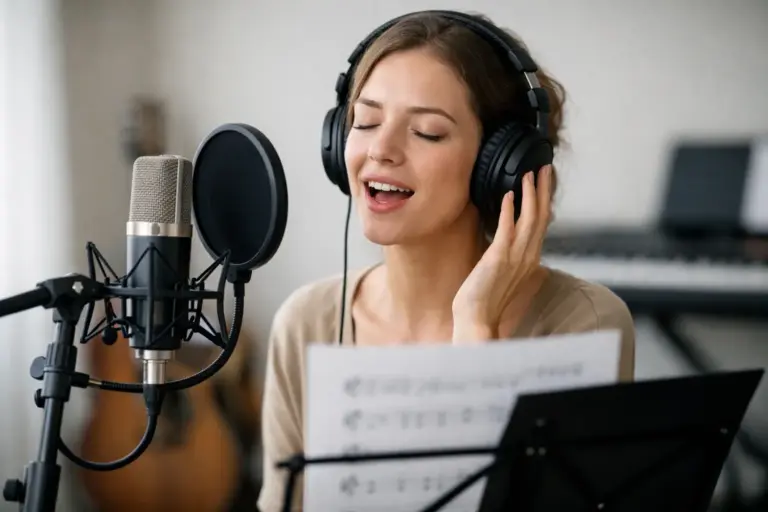
Finding a Vocal Coach for Adult Beginners
You do not need to have started at twelve, sung in choirs for years, or called yourself "musical" to begin voice training. Many people look for a vocal coach for adult beginners after years of putting it off - sometimes because work got busy, sometimes because confidence dipped, and sometimes because they simply assumed they were too late. They are not too late.
Adult beginners often bring something younger students do not. They usually know why they want lessons. Some want to sing with more freedom and confidence. Some want to prepare for auditions or performances. Others want a stronger, steadier voice because speaking in meetings, leading teams, or presenting under pressure has exposed real weaknesses in breath, clarity, and vocal stamina. That kind of self-awareness can make adult learning highly productive.
I'm John J Norton, a professional singer and vocal coach. I teach one-to-one online, wherever you are in the world. Book a free 15-minute call.
What a vocal coach for adult beginners should actually do
A good coach does more than hand out scales and ask you to copy sounds. Especially for adults, coaching should identify how your voice is currently functioning, where tension or inefficiency is getting in the way, and what technical changes will create a healthier, more reliable sound.
That means your lessons should not feel generic. If your pitch wavers because your breath collapses, the answer is different than it would be for someone whose pitch issues come from tongue tension or an overly pressed tone. If you struggle to project, the issue may not be volume at all. It may be inefficient resonance, a tight jaw, poor alignment, or the habit of holding back.
For beginners, the coach matters because your early habits matter. A strong teacher helps you build coordination from the start rather than asking you to push harder and hope for the best. That is true whether your goal is singing or speaking with more authority.
Why adult beginners need a different approach
Adults learn differently from children. They tend to ask better questions, notice finer distinctions, and bring stronger motivation. They also tend to arrive with more tension, more self-consciousness, and more ingrained habits.
Some adults have spent years speaking from the throat, running on shallow breath, or apologizing with their voice before they have even finished a sentence. Others have learned to sing quietly so no one hears them make mistakes. Those patterns do not disappear because someone says, "relax." They require careful, skillful work.
A thoughtful coach for adult beginners will usually balance three things at once. First, technical clarity. You need to understand what your body is doing and why. Second, pacing. Too much information too quickly creates confusion. Third, confidence. Adults often improve fastest when they feel safe enough to experiment without feeling judged.
That does not mean lessons should be soft or vague. It means they should be precise and constructive. Real progress comes from disciplined training, but discipline works best when it is matched with good observation and encouragement.
What to expect in your first lessons
Most adult beginners arrive with one big question: "Can I actually learn to sing?" In many cases, the answer is yes - but the more useful question is what kind of progress is realistic and what process will get you there.
Your first lessons should usually focus less on performance and more on setup. A coach may listen for breath management, posture, onset, pitch accuracy, resonance, diction, and tension patterns in the jaw, tongue, neck, or shoulders. If you are also a professional speaker, they may pay attention to vocal endurance, clarity, pacing, and whether your speaking voice carries authority or strain.
You may start with simple exercises that seem almost too basic. That is often a good sign. Beginner work should establish coordination, not chase dramatic effects. Sustained vowels, light sirens, gentle range exploration, and breath-based exercises can reveal a great deal about how the voice is currently organized.
At the same time, a good lesson should connect technique to practical outcomes. You should come away knowing not just what to practice, but what the exercise is designed to improve.
Signs you have found the right coach
Not every skilled singer is a skilled teacher, and not every pleasant teacher is technically reliable. For adult beginners, the right fit is usually a combination of expertise, communication, and attention to the individual.
A strong coach can explain vocal function in clear language without making everything sound mystical or impossibly complex. They can hear small but important details in your sound. They can adjust their method when one explanation does not land. Most importantly, they do not force every student into the same model of singing.
You should also notice that your sessions are building something measurable. That might mean steadier pitch, easier high notes, less throat tension, clearer tone, stronger breath support, or more ease when speaking in front of others. Progress is not always linear, but it should feel intentional.
If every lesson leaves you confused, vocally tired in a bad way, or dependent on imitation without understanding, that is worth paying attention to. Adult beginners benefit from coaching that develops independence, not dependency.
Common fears adult beginners bring to voice lessons
One of the biggest barriers is embarrassment. Many adults worry that they sound foolish, that they lack natural talent, or that they will be the oldest beginner in the room. Those concerns are understandable, but they are rarely useful.
Voice training is a skill-building process. Talent can help, but coordination matters more than most people think. Plenty of beginners who believe they are "bad singers" are simply untrained singers. That is a very different situation.
Another common fear is that improvement should happen immediately. Some changes do come quickly, especially when inefficient habits are obvious and easily corrected. Other changes take repetition and patience. The voice is physical. You are training coordination, awareness, and consistency, not just collecting tips.
There is also the question of range. Many beginners fixate on high notes because they seem like proof of ability. In practice, a healthier voice often begins with better balance in the middle of the range. Once the instrument is working more efficiently, range tends to develop more sensibly.
Singing goals and speaking goals often overlap
This is where adult coaching can become especially valuable. Many people think singing lessons and speaking work belong in separate worlds. In reality, they often share the same foundations.
Breath efficiency, freedom in the jaw and tongue, resonance, clear articulation, and the ability to sustain tone without strain matter in both contexts. Someone who struggles to sing with ease may also speak too quietly, lose authority under pressure, or tire quickly during presentations. Someone who learns to organize the voice better in speech often finds that singing starts to feel less forced.
For professionals, this overlap is not theoretical. A more grounded, resonant voice can change how you are perceived in meetings, pitches, interviews, and leadership settings. For singers, stronger technical control supports tone, stamina, and expressive freedom. In both cases, the voice becomes more reliable.
That dual perspective is part of what makes individualized coaching so useful. A teacher with performance experience and practical vocal knowledge can help connect artistry with real-world communication rather than treating them as unrelated skills.
How to make the most of lessons as a beginner
Consistency matters more than intensity. You do not need marathon practice sessions to improve. You do need regular, focused work. Ten to twenty thoughtful minutes done consistently will usually serve a beginner better than one long, unfocused session each week.
It also helps to stay curious rather than self-critical. Your job is not to prove you are good. Your job is to notice what changes the sound, what creates ease, and what habits pull you off balance. That mindset makes learning faster.
Recordings can be helpful, though they can also trigger unnecessary judgment. Use them as information, not as evidence against yourself. The point is to hear patterns more clearly.
And ask questions. Adult students often progress well because they want to understand. If something feels unclear, say so. A good coach will welcome that.
Is now the right time to start?
If you are waiting to feel fully confident before beginning, you may wait a long time. Confidence usually follows evidence. It grows when you experience your voice responding differently, when notes become steadier, when speaking feels less effortful, and when technique starts producing reliable results.
Starting as an adult is not a disadvantage. In many cases, it is an advantage because the work has meaning. You are not there because someone signed you up. You are there because you want a more capable, expressive, and dependable voice.
If that is what you want, the next step is not to wonder whether you are worthy of coaching. It is to find a teacher who can hear what your voice needs and help you build it with patience, precision, and respect. A well-trained voice does not begin with perfection. It begins with attention.
Want to work on this with me?
I'm John J Norton, a professional singer and vocal coach. I teach one-to-one online, wherever you are in the world.
Want to go beyond reading?
Put this into practice with my step-by-step online course — the first 3 lessons are free to try.
Explore the Online Singing Course